New Buffalo Short-Term Rental Zoning: Where Can You Rent?
September 24, 2026
September 24, 2026
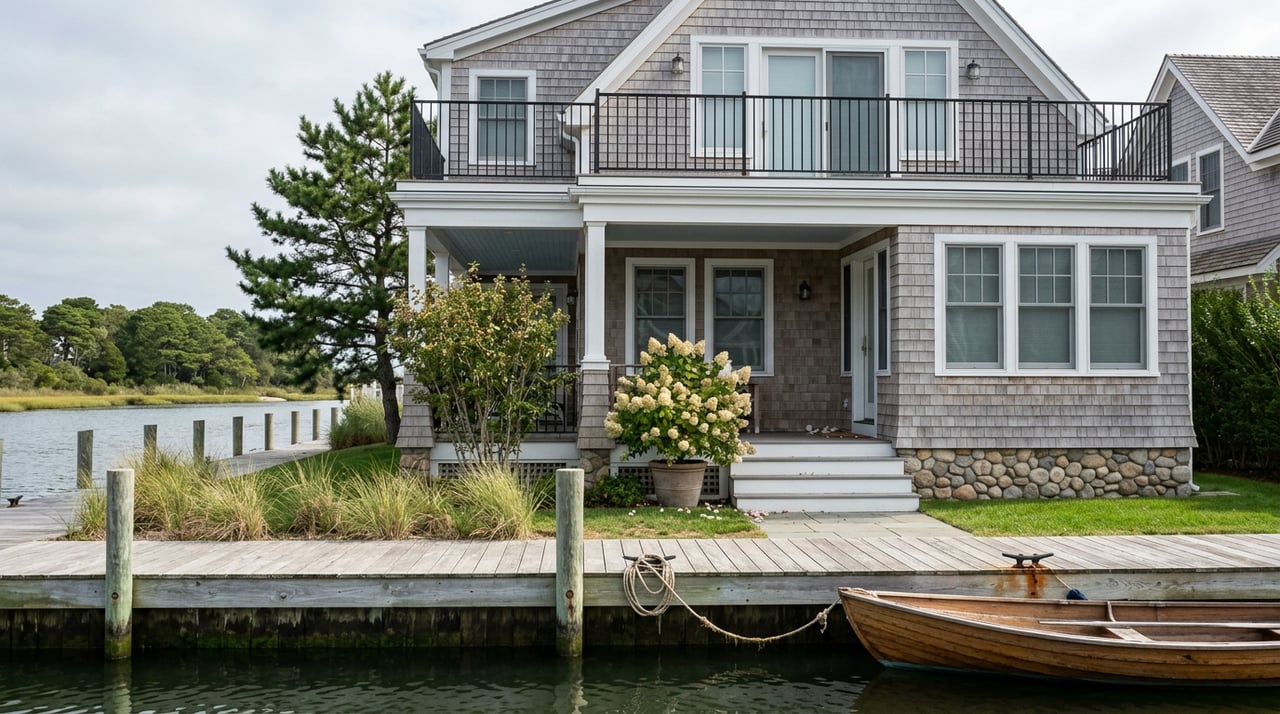
Two condos go on the market in New Buffalo the same week. Same square footage, same finishes, same asking price within a few thousand dollars of each other. One sits on a quiet residential street three blocks from the beach. The other sits above a storefront near the marina, close enough to hear halyards clanking against masts in the wind.
A buyer weighing both as part-time income property will treat them as interchangeable. They are not. One of these units can legally be listed on a nightly rental platform starting next month. The other cannot, no matter how much the owner wants it to, no matter what a listing agent might imply. The difference has nothing to do with the building and everything to do with a zoning line the city drew in 2021.
In November 2021, Harbor Country News reported that the New Buffalo City Council approved a zoning ordinance amendment that split the city into two categories for short-term rental purposes. New rental licenses are now prohibited in the city's three residential zoning districts, known as R-1, R-2, and R-3.
Everywhere else in the city, the door stayed open. WSBT reported City Manager Darwin Watson's statement that new short-term rentals would continue to be allowed in the Central Business, General Commercial, and Waterfront Marina districts and that "there is no cap." The council vote was 3-0, with two members absent, and the ordinance text is still published on the city's site through ecode360.
That single boundary is why the marina-adjacent condo and the residential-street condo, priced within a few thousand dollars of each other, are not the same investment. One sits inside a category where the city is actively welcoming new rental permits. The other sits inside a category the city closed to new entrants nearly five years ago.
Mayor John Humphrey framed the decision as a matter of keeping the city functional for the people who live there year-round, not as an attempt to punish visitors or the second-home owners who make up much of the local tax base. Part of the context matters here. Humphrey noted at the time that the city was down to roughly 1,000 registered voters, a number small enough that a wave of new short-term rentals in residential neighborhoods could meaningfully change who is actually living there full time versus cycling through on weekend stays.
The debate was not one-sided. Business owners downtown worried publicly that restricting rentals would cut into the tourist spending that supports restaurants and shops. Longtime residents argued the opposite, that unchecked rental growth was eroding the sense of a lived-in town. The council's compromise was geographic rather than numerical: instead of capping the total number of rentals citywide, it drew a map and let each zone answer the question differently.
At the same meeting where the ordinance passed, Humphrey pointed to something bigger than local politics. State legislation was moving through Lansing that would have stripped municipalities of the authority to zone short-term rentals at all, treating them as an ordinary residential use permitted anywhere a house is permitted. City officials estimated that if that kind of preemption had passed, New Buffalo's roughly 200 rentals at the time, about 150 licensed and an estimated 50 operating without a license, could have grown toward 750 units.
That bill never became law. BNBCalc reports that Michigan still has not passed a statewide law taking zoning authority over short-term rentals away from cities and townships, and the city's own short-term rental page, last updated in January 2026, describes the same licensing and zoning framework that passed in 2021. Nearly five years after the vote, the line still holds. For a buyer today, that is the practical takeaway: this is not a temporary or contested rule likely to flip in the next legislative session. It is the rule.
The ordinance is not just a zoning map, it is a full licensing and inspection system with its own compliance requirements for anyone operating legally. Properties need an annual inspection, a designated local agent who lives within 20 miles of the city, working smoke detectors installed to Michigan Residential Code standards. Operating without meeting these requirements is a municipal civil infraction carrying a fine of at least $500, with higher fines for repeat violations.
For a buyer, the practical risk is simpler than any of that. It is assuming a residential-zone property can be turned into a rental because a neighbor's house down the street already operates as one. Yours, purchased today, would not qualify for a new license in that same zone no matter how similar the two homes look.
The city publishes a current list of active rental permits, and checking a specific address against that list before writing an offer takes a few minutes and settles the question definitively rather than relying on what an owner or a listing description claims.
For properties that do sit in an eligible zone, the current numbers give a sense of what the license is worth. Over the twelve months ending July 2026, active short-term rental listings across the New Buffalo market averaged about $46,528 in annual revenue, at a $501 average nightly rate and 33.5 percent occupancy, across roughly 167 active listings, according to short-term rental data platform AirROI. That figure blends grandfathered residential-zone rentals with newer marina and downtown units, so it is a useful reference point rather than a guarantee tied to any single zone.
The gap between that number and zero, which is what a non-eligible property earns as a rental no matter how well it is furnished, is the real financial weight of the zoning line. It is also why two similarly priced properties on opposite sides of that line are not comparable investments even when every other feature matches.
New Buffalo Township, which wraps around the city on three sides and includes the Union Pier area, plays by different rules entirely. Both short-term and long-term rentals are permitted township-wide, but every rental needs a township license under Chapter 332 of the township code. New Buffalo Township says licenses are issued for a 36-month term following a building department inspection. In March 2025, the township adopted an amendment to its short-term rental licensing rules.
The practical lesson is that "New Buffalo" as a search term covers at least three different rulebooks: the city's zone-based restriction, the township's parcel-based cap, and whatever a specific condo association's own bylaws add on top of either. A property a few hundred feet apart, on either side of a municipal boundary most buyers never think to check, can be governed by an entirely different set of answers to the same question.
Does this apply to a home I plan to live in full time? No. The zoning restriction only affects new short-term rental licensing. Buying a home in a residential zone to live in year-round is unaffected by any of this.
If a residential-zone property already has a rental license, does that license transfer to me as the new owner? Confirm directly with the city's zoning administrator whether an existing rental license transfers to a new owner. It is a detail worth verifying in writing rather than assuming.
Is the city limit the same as the township? No. New Buffalo City and New Buffalo Township are separate governments with separate rental ordinances. A property's mailing address will not tell you which one applies. The parcel's actual location relative to the municipal boundary will.
Zoning maps rarely show up in a property search, but they decide more about a lakeshore purchase's economics than square footage or finish quality ever will. If you are comparing properties in New Buffalo and trying to figure out which side of these lines a specific address falls on, Brian Waite can walk through the zoning, licensing status, and township versus city distinctions with you before you write an offer. Let's Connect.
This article is general information, not legal, tax or financial advice. Consult a qualified professional about your situation.
Stay up to date on the latest real estate trends.
Brian Waite delivers honest guidance and exceptional service to buyers and sellers throughout Southwest Michigan. From first homes to lakefront properties, he's committed to making every move a success.